A Culture of Reliability®

{'id': 590160628, 'path': 'cities', 'slug': 'cities', 'title': 'Cities', 'url': 'cities', 'full_url': 'cities', 'type': 0, 'parent_id': 0, 'order': 72, 'created_ts': 1674676865, 'page_settings': {'open_in_new_tab': False, 'allow_community_posts': False, 'hide_from_entry_editor': False, 'lock_posts_after_publishing': False, 'hide_from_search_engines': False}, 'extras': {}, 'about_html': '', 'meta_title': None, 'header_image_id': None, 'layout_name': None, 'primary_posts_count': 0, 'regular_posts_count': 0, 'is_read_only': False, 'site_id': 23839865, 'status': 3, 'tags': (), 'meta_tags': (), 'breadcrumb_title': None, 'fb_author_name': None, 'url_header_image': '', 'isPublic': False, 'isPrivate': False, 'isUnlisted': True, 'isReadOnly': False, 'parents': [], 'is_restricted_for_reading': False, 'linkout': False, 'original_url': 'cities', 'href': 'https://victoria.rebelmouse.dev/cities', 'absolute_url': 'https://victoria.rebelmouse.dev/cities'}
None

NOT a static page

https://victoria.rebelmouse.dev/taylor-swifts-eras-tour-is-even-bigger-than-you-think-and-these-streaming-stats-prove-it

Taylor Swift’s Eras Tour Is Even Bigger Than You Think — And These Streaming Stats Prove It

Taylor Swift’s Eras Tour Is Even Bigger Than You Think — And These Streaming Stats Prove It

It’s generally expected within the industry that when you track a major artist’s streaming numbers while they’re on tour, you might see a slight uptick for the first week or two, which would recede gradually over the course of its dates. Maybe it briefly spikes if they have a newsy moment onstage at one stop, or if one song takes off as a new single or viral fan favorite — but even then, it’s contained to a song or two, not generally lifting the rest of the artist’s catalog along with it.

Unless, of course, you’re Taylor Swift.

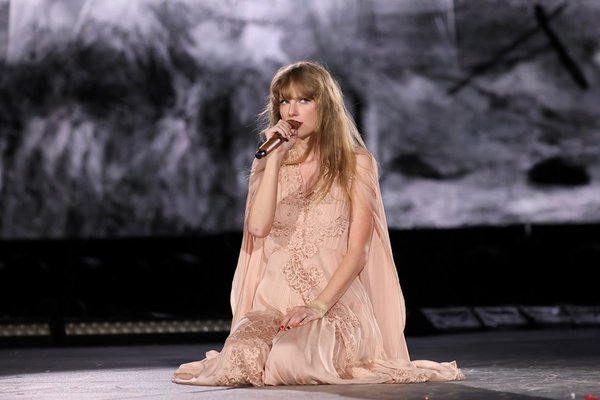
Her Eras Tour, which launched in Glendale, Arizona on March 17, hasn’t launched a viral moment so much as the tour itself has gone viral, further spreading to every corner of the internet with every successive date. Each stop has dominated the news cycle for days, whether due to its special guests, its surprise songs, its celebrity attendees (particularly when one of them happened to be the lightning-rod frontman for a particular U.K. indie band), its Easter eggs, or its volcanic fan response — even the introduction of a new outfit to Swift’s rotation can be headline-worthy.

The impact of Swift’s Eras Tour on her catalog’s streaming numbers was, of course, immediate. The week of her opening three dates in Glendale, with every new mini-revelation about the tour’s design, structure and setlist blanketing the internet like wildfire smog, her official on-demand U.S. streams jumped 50%, according to Luminate. For an artist who already streams in the hundreds of millions every week, that’s a resounding, and extremely rare, leap to make for any reason short of a new album release or a death. (It should also be said that this gain does not even account the four new “Taylor’s Version” songs she released to help celebrate the tour’s kickoff; that gain would’ve been even larger had they been included.)

But that’s not even the jaw-dropping part. The really unprecedented thing about the Eras Tour’s streaming impact is that the initial bump did not start receding back to its usual sea level after a week or two — it continued to grow. And grow.

Eight weeks into the tour, as Swift was taking over Nashville with a trio of dates at Nissan Stadium and rumors of her and Matty Healy’s burgeoning relationship were beginning to swirl, those numbers were still rising — by then, they were up 83% total from the week before the tour launched. From there, Swift’s streaming numbers finally started to level off — but by Week 10 of the tour, she was still up 79% from where she was pre-Eras, earning hundreds of millions more streams weekly.

What makes these gains even more staggering is that they're not limited to just a song or two, or even a single Era: it's all across the show's setlist. In fact, of the 42 songs that Taylor Swift has played at every Eras date so far, 23 of them had at least doubled in weekly streams by the tour's 10th week, and all of them were up -- except for "Anti-Hero" and "Lavender Haze," her most recent singles when the tour started, which were coming down from their popularity peaks of months earlier.

You can see the 20 biggest gainers (in terms of total streams gained) here -- from the week before the Eras Tour started, to the week of the launch, to the 10th week of the tour:

And then, of course, there are the surprise songs: an additional two songs each concert that have rotated with every live date, delighting fans in attendance and often infuriating those missing out. Those have also seen major gains, with 48 of the 50 surprise songs she'd played at her 25 live dates through the chart week of May 25 increasing in streams the week she performed them, and most by percentages well into the double digits. (Only Midnights tracks "Snow on the Beach" and "Question?" did not benefit from the Eras bump.)

You can see the 20 biggest gainers (in terms of percentage gained) below, from the week before to the week of them being featured:

Can Swift keep the momentum going for another two months of Eras in this country -- and then maybe for a brief swing through Mexico in late August and South America this November? We'll find out soon enough -- her latest influx of Midnights-related goodies may help there as well -- but certainly, her Eras success has proven so far that betting the under with Taylor Swift in rarely a smart idea in 2023.

The Conversation (0)
Don’t miss a thing
What matters in tech, in your inbox daily
Follow us on
Don’t miss a thing
What matters in tech, in your inbox daily
Follow us on

test

Welcome to News Originals with me, Bev, here in Washington, D.C.The inability of human beings to put down their mobile phones is destroying relationships and detonating families. Ask any parent of teenagers what causes the most conflict in their house, and I promise you they'll say it's the perpetual nagging of "Put that down!", the vanishing attention span, the boyfriend breakup that can't be left at the front door, and the school bully who now travels home in your child's pocket.We don't need a government to tell us these devices are harming our kids. We are painfully aware of it. But Starmer's social media ban for under-16s will do nothing meaningful to address the addictive and destructive nature of these platforms. Kids will find workarounds. Parents will create fake accounts to stop the constant nagging. Some children will simply be allowed access to Snapchat because their parents want them to talk to their friends after school, as kids have always done.But be under no illusion. For all of us, this is the creaking open of the digital cage door, dressed up as a welcoming velvet rope.Just as narrative control once meant that arguing against unscientific lockdowns rendered you a "granny killer," arguing that this TikTok ban is wrong will now make you a "paedophile enabler." It does not.Every right-minded person wants children to grow up safely. The paedophiles won't disappear. They'll move to gaming platforms or other sites accessed through VPNs. They'll go back to hanging around school gates, as they did in the old days.If you have any imagination at all, and can see where this inevitably leads, you know that none of it is good. It will fundamentally change the relationship between the individual and the internet in the UK, potentially forever.The addictive nature of the algorithm is our true enemy. Call out the tech companies for that. Demand to see their research into targeted advertising.One of the most pernicious stories I've ever heard is that if a teenage girl takes a selfie and then deletes it, her phone can immediately serve up a makeup advert designed to catch her at her most vulnerable moment.So why is it up to me, rather than Keir Starmer, to tell you about that?Have you ever heard him criticising the tech bros whose own children rarely hold a smartphone? No, not really. That might make conversations around the Davos dinner table a little awkward.Do you feel that any politician has genuinely helped parents and children arm themselves against this influence through tools or apps that actually work?Not a single MP seems to be begging teachers to remove screens from classrooms and homework altogether, as they have done in Sweden.The antidote to staring at a wall, as one girl said in an interview today, is sport. It's music. It's drama. It's clubs. Invest in our teenagers if you genuinely want to get them out of their bedrooms.I freely admit that parents should not be left to fight the largest technology companies in the world on our own. It is not a fair fight.I tell my children that their phones are designed to make them addicted. It is up to them to develop the discipline to put them down and switch them off.And as parents, we must model that behaviour ourselves. Mealtimes with phones out of sight. Not constantly walking around with one in our hand. Charging them downstairs at night.It isn't easy. But good parenting has never been easy.The cost of this policy is so significant that it's no wonder Starmer is presenting it as a parting gift before he is potentially forced from office. He is, in my view, fulfilling the ambitions of a global surveillance framework championed by his allies at the UN, the WHO and the WEF.And if he can get this critical piece of digital infrastructure over the line, he'll likely walk into a very well-paid position at the NGO top table, because it is going to make a small number of people extremely rich.Let me ask you this:How do you stop a 13-year-old from using Snapchat without checking the 30-year-old as well?You can't.So every one of us is going to have our faces scanned.We are effectively cut-and-pasting the Australian model, a model many assume has already proven successful. Not necessarily. It was only implemented in December last year. It is far too soon to know whether it has had any meaningful impact on grooming, bullying, self-harm, poor mental health, or teenage wellbeing more broadly.Yes, there has been a measurable decline in child accounts. But how many of those users simply claimed to be adults and created new accounts?That doesn't prove children are safer.We can watch and learn from Australia. But we cannot pretend the experiment has already delivered a definitive verdict. It hasn't.Starmer described the ban as "a huge step for our country." He said it represents our values and forms part of a cultural transformation in how children grow up.But the government has no evidence that a blanket ban will work better than targeted restrictions on harmful features such as addictive algorithms.In reality, this means that before you, as an adult, read a post, store a photo, or send a message, you'll be expected to prove your identity and demonstrate that you're a citizen pre-approved to access information.Who do they think they are?Empty our bins. Fix our roads. Run our hospitals.Otherwise, get out of our lives.The default setting of Britain used to be that the state left you alone unless you gave it a reason not to. That principle has been gradually eroded—and much more quickly in recent years.This isn't a boot stamping on a face. You would have rejected that. Instead, it's the slow erosion of individual freedom.Now you're presumed to be a suspect with a phone until you prove otherwise.They didn't ask you, "Do you mind if we build a national biometric database?"Because most of us would have said, "No thanks. I'm quite happy without one."Instead, they effectively ran a pilot scheme through online pornography.Almost a year ago, age-verification checks for adult content went live in the UK. Predictably, Pornhub traffic reportedly fell by 77%.That may not be a bad thing. But let's be honest: VPN sales surged.How many of those VPNs ended up in the hands of teenagers whose parents can no longer see what they're doing online?There were no marches in the streets. No television panellists screaming outrage because, frankly, unrestricted access to pornography is not a cause many people are prepared to publicly champion.But the government paid attention. Then it moved on to stage two.Apple and Google have now been ordered to install software capable of examining user content, under threat of criminal penalties if they refuse. Refusing to comply could expose executives to prison sentences of up to five years.And remember: in September 2025, Starmer stood behind a lectern and announced a mandatory digital ID scheme with the confidence of a man who assumed it would be popular.Britain's digital ID push isn't about streamlining paperwork. It's about hardwiring state power into everyday life.The public responded with almost three million signatures on a single petition—the fourth-largest petition in parliamentary history.He completely underestimated you.Public support for digital ID collapsed from +35 to -14.That was the nation telling the Prime Minister a very clear "No."And who decides which platforms are dangerous?There is already outrage online that Bluesky—the self-described "nice" platform—is exempt from this ban.I spent a few minutes looking through it today. It was a mixture of sunset photographs and some of the most bitter political activists imaginable, demanding boycotts and bans against anyone who steps outside their narrow ideological boundaries.I can see why Keir Starmer likes it.This generation of 16-year-olds has been given the vote, but not the ability to read about politics online.Perhaps the BBC will do that job for the government.This government doesn't seem particularly concerned about preventing violent crime, but it does seem very concerned about limiting what people can see and discuss online.Social media, of course, is not the first technology to transform teenage life.I remember stretching the telephone cord into the hallway so I could have a conversation without my parents listening.Teenagers are hard-wired to seek independence. They need private conversations with friends. That's important.They have always wanted spaces where adults aren't listening.A Snapchat call between friends is not the same thing as an algorithmically driven platform competing for a child's attention every waking hour.This debate has become far too simplistic.Social media is not pure poison.The real challenge lies in teaching young people how to live with technology, because they will have to do so for the rest of their lives.We teach children how to cross the road. We teach them about healthy eating.Why aren't we teaching attention management?Why aren't we teaching children practical techniques for putting their phones down?How to recognise addictive design features.How to switch notifications off.How to create phone-free periods during the day.How to sleep without a device beside the bed.How to concentrate on one task at a time.These are life skills now—perhaps some of the most important life skills of all.A social media ban may help some families. It may help children who are compliant and responsive to authority. It may reduce exposure to harmful content. For some, it may ease the relentless pressure of online life.Let's hope it does.But at what cost to our civil liberties?No law can replace engaged and competent parents, empowered teachers, and children who have learned to control technology rather than be controlled by it.Let me know what you think in the comments.Like and share this wherever you can, and subscribe to GB News on YouTube.See you again soon.

Featured

Newsletter