A Culture of Reliability®

{'id': 590160628, 'path': 'cities', 'slug': 'cities', 'title': 'Cities', 'url': 'cities', 'full_url': 'cities', 'type': 0, 'parent_id': 0, 'order': 72, 'created_ts': 1674676865, 'page_settings': {'open_in_new_tab': False, 'allow_community_posts': False, 'hide_from_entry_editor': False, 'lock_posts_after_publishing': False, 'hide_from_search_engines': False}, 'extras': {}, 'about_html': '', 'meta_title': None, 'header_image_id': None, 'layout_name': None, 'primary_posts_count': 0, 'regular_posts_count': 0, 'is_read_only': False, 'site_id': 23839865, 'status': 3, 'tags': (), 'meta_tags': (), 'breadcrumb_title': None, 'fb_author_name': None, 'url_header_image': '', 'isPublic': False, 'isPrivate': False, 'isUnlisted': True, 'isReadOnly': False, 'parents': [], 'is_restricted_for_reading': False, 'linkout': False, 'original_url': 'cities', 'href': 'https://victoria.rebelmouse.dev/cities', 'absolute_url': 'https://victoria.rebelmouse.dev/cities'}
None

NOT a static page

https://victoria.rebelmouse.dev/queer-jams-of-the-week-new-music-from-janelle-monae-sam-smith-renee-rapp-more

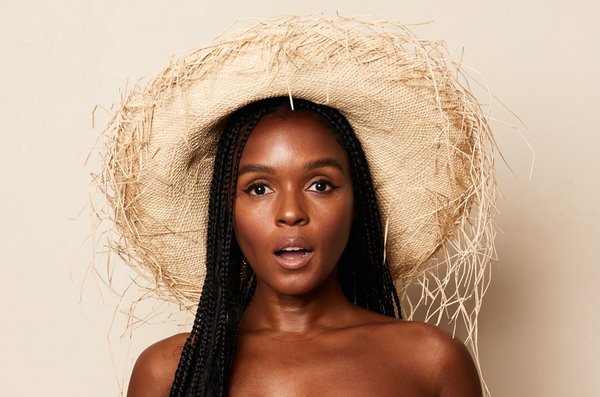
Queer Jams of the Week: New Music from Janelle Monáe, Sam Smith, Reneé Rapp & More

Queer Jams of the Week: New Music from Janelle Monáe, Sam Smith, Reneé Rapp & More

With Pride Month in full swing, get into some of our favorite new releases from LGBTQ artists! Billboard Pride is proud to present the latest edition of Queer Jams of the Week, our roundup of some of the best new music releases from LGBTQ artists.

From Janelle Monáe’s joyful new album to Sam Smith and Madonna’s steamy new collab, check out just a few of our favorite releases from this week below:

Janelle Monáe, The Age of Pleasure

After a musical career largely defined by pushing back against the status quo and the boundaries surrounding her, Janelle Monáe decided to make her latest album radical in a different sense — radically joyful. The Age of Pleasure is a sun-soaked, good vibes only LP that successfully lives up to the promise of its title with each passing song. Whether Monáe is gassing herself up (“Phenomenal,” featuring a well-placed Doechii), dancing the night away (“Champagne S–t”), or hitting up a lover (“Paid in Pleasure”), she keeps the party going throughout all 30 minutes of this delectable project.

Sam Smith & Madonna, “Vulgar”

Speaking of things that live up to their title, “Vulgar,” the much-hyped new single from Sam Smith and Madonna, is pretty much exactly what it sounds like. The grinding, unyielding beat soundtracks the intentionally untethered lyrics, as Smith and Madge both throw up middle fingers to societal expectations of chastity and restraint. Hell hath no fury like two pop superstars scorned; “Vulgar” offers a challenge to anyone that wants to mess around and find out for themselves.

Reneé Rapp, “Snow Angel”

Reneé Rapp would like to get real with you for a moment. “Snow Angels,” the pop phenomenon’s latest release, stands out from the moment its first wistful chord is struck — Rapp’s voice sounds smaller and more delicate than ever, as she recalls a traumatic breakup. As the song progresses, the singer keeps the tenderness intact, until the bombastic sting of the second chorus arrives. With a slam of guitars that quickly disappates, only to return for the bridge, Rapp captures the chaos and confusion of the subject matter, as she belts on the song’s bridge “I loved back then what I hate today.”

Christine and the Queens, Paranoïa, Angels, True Love

On his wide-ranging new album, Christine and the Queens embraces disorder. Paranoïa, Angels, True Love follows Chris on a journey of self-discovery that spans across as many different soundscapes as he can get his hands on, including R&B (“Tears Can Be So Soft”), introspective dance (“Angels Crying In My Bed” featuring Madonna) and avant-pop (“To Be Honest”). It’s a bold, eclectic new direction for the beloved French star — and a promise of more experimentation to come.

Shamir, “Oversized Sweater”

In times as unpredictable as ours, it’s good to find security where you can; for Shamir, that’s their “Oversized Sweater.” On this excellent new single from the indie star, Shamir seeks out comfort and stability amidst anxiety and chaos, and does so over a superbly-constructed pop-rock melody. It’s a testament to their unwavering skill at song-craft that Shamir is able to accurately portray their own forays into anxiety over a track that feels like a warm hug when you desperately need one.

VINCINT, “Take Me Home”

A good man is hard to find, but that’s certainly not going to stop VINCINT from searching for “the one.” With “Take Me Home,” VINCINT pleads with his latest interest to show him that he’s in it for the long haul. The punchy pop production courtesy of John Greenham and Tiggs is top-tier, but the true star of the track (as with all of his others) is the singer’s emotive, powerhouse vocal, as he belts to his lover, “If you want me then show me you love me/ C’mon and take me home.”

Slayyyter, “Out of Time”

Pop singer Slayyyter is ready for her close-up. On “Out of Time,” the songstress pairs her now-signature power-pop production with a glimpse at the inner life of an up-and-coming pop sensation. With synths and ’80s drums kicking in throughout the song’s delightful chorus, Slayyyter lets the listener in on what it is she’s after. “She’s got the tricks, she’s got the hits, sees her name in the lights,” she sings. “Heard it before, she’s out the door/ Can’t waste any more time.”

Romy, “Loveher”

Romy is ready to reintroduce herself now. “Loveher,” the lead single off of the dance star’s forthcoming debut solo album, sees Romy getting more intimate than she’s ever been on her previous work. The dance production (this time courtesy of dance superstar Fred Again..) remains blissfully intact, but is this time accompanied by the star’s vulnerable vocal, where she opens up about what it means to fall in love with another woman. It’s a tender, touching dance song that will simultaneously have you tapping your foot and getting misty-eyed.

Check out all of our picks on Billboard’s Queer Jams of the Week playlist below:

The Conversation (0)
Don’t miss a thing
What matters in tech, in your inbox daily
Follow us on
Don’t miss a thing
What matters in tech, in your inbox daily
Follow us on

test

Welcome to News Originals with me, Bev, here in Washington, D.C.The inability of human beings to put down their mobile phones is destroying relationships and detonating families. Ask any parent of teenagers what causes the most conflict in their house, and I promise you they'll say it's the perpetual nagging of "Put that down!", the vanishing attention span, the boyfriend breakup that can't be left at the front door, and the school bully who now travels home in your child's pocket.We don't need a government to tell us these devices are harming our kids. We are painfully aware of it. But Starmer's social media ban for under-16s will do nothing meaningful to address the addictive and destructive nature of these platforms. Kids will find workarounds. Parents will create fake accounts to stop the constant nagging. Some children will simply be allowed access to Snapchat because their parents want them to talk to their friends after school, as kids have always done.But be under no illusion. For all of us, this is the creaking open of the digital cage door, dressed up as a welcoming velvet rope.Just as narrative control once meant that arguing against unscientific lockdowns rendered you a "granny killer," arguing that this TikTok ban is wrong will now make you a "paedophile enabler." It does not.Every right-minded person wants children to grow up safely. The paedophiles won't disappear. They'll move to gaming platforms or other sites accessed through VPNs. They'll go back to hanging around school gates, as they did in the old days.If you have any imagination at all, and can see where this inevitably leads, you know that none of it is good. It will fundamentally change the relationship between the individual and the internet in the UK, potentially forever.The addictive nature of the algorithm is our true enemy. Call out the tech companies for that. Demand to see their research into targeted advertising.One of the most pernicious stories I've ever heard is that if a teenage girl takes a selfie and then deletes it, her phone can immediately serve up a makeup advert designed to catch her at her most vulnerable moment.So why is it up to me, rather than Keir Starmer, to tell you about that?Have you ever heard him criticising the tech bros whose own children rarely hold a smartphone? No, not really. That might make conversations around the Davos dinner table a little awkward.Do you feel that any politician has genuinely helped parents and children arm themselves against this influence through tools or apps that actually work?Not a single MP seems to be begging teachers to remove screens from classrooms and homework altogether, as they have done in Sweden.The antidote to staring at a wall, as one girl said in an interview today, is sport. It's music. It's drama. It's clubs. Invest in our teenagers if you genuinely want to get them out of their bedrooms.I freely admit that parents should not be left to fight the largest technology companies in the world on our own. It is not a fair fight.I tell my children that their phones are designed to make them addicted. It is up to them to develop the discipline to put them down and switch them off.And as parents, we must model that behaviour ourselves. Mealtimes with phones out of sight. Not constantly walking around with one in our hand. Charging them downstairs at night.It isn't easy. But good parenting has never been easy.The cost of this policy is so significant that it's no wonder Starmer is presenting it as a parting gift before he is potentially forced from office. He is, in my view, fulfilling the ambitions of a global surveillance framework championed by his allies at the UN, the WHO and the WEF.And if he can get this critical piece of digital infrastructure over the line, he'll likely walk into a very well-paid position at the NGO top table, because it is going to make a small number of people extremely rich.Let me ask you this:How do you stop a 13-year-old from using Snapchat without checking the 30-year-old as well?You can't.So every one of us is going to have our faces scanned.We are effectively cut-and-pasting the Australian model, a model many assume has already proven successful. Not necessarily. It was only implemented in December last year. It is far too soon to know whether it has had any meaningful impact on grooming, bullying, self-harm, poor mental health, or teenage wellbeing more broadly.Yes, there has been a measurable decline in child accounts. But how many of those users simply claimed to be adults and created new accounts?That doesn't prove children are safer.We can watch and learn from Australia. But we cannot pretend the experiment has already delivered a definitive verdict. It hasn't.Starmer described the ban as "a huge step for our country." He said it represents our values and forms part of a cultural transformation in how children grow up.But the government has no evidence that a blanket ban will work better than targeted restrictions on harmful features such as addictive algorithms.In reality, this means that before you, as an adult, read a post, store a photo, or send a message, you'll be expected to prove your identity and demonstrate that you're a citizen pre-approved to access information.Who do they think they are?Empty our bins. Fix our roads. Run our hospitals.Otherwise, get out of our lives.The default setting of Britain used to be that the state left you alone unless you gave it a reason not to. That principle has been gradually eroded—and much more quickly in recent years.This isn't a boot stamping on a face. You would have rejected that. Instead, it's the slow erosion of individual freedom.Now you're presumed to be a suspect with a phone until you prove otherwise.They didn't ask you, "Do you mind if we build a national biometric database?"Because most of us would have said, "No thanks. I'm quite happy without one."Instead, they effectively ran a pilot scheme through online pornography.Almost a year ago, age-verification checks for adult content went live in the UK. Predictably, Pornhub traffic reportedly fell by 77%.That may not be a bad thing. But let's be honest: VPN sales surged.How many of those VPNs ended up in the hands of teenagers whose parents can no longer see what they're doing online?There were no marches in the streets. No television panellists screaming outrage because, frankly, unrestricted access to pornography is not a cause many people are prepared to publicly champion.But the government paid attention. Then it moved on to stage two.Apple and Google have now been ordered to install software capable of examining user content, under threat of criminal penalties if they refuse. Refusing to comply could expose executives to prison sentences of up to five years.And remember: in September 2025, Starmer stood behind a lectern and announced a mandatory digital ID scheme with the confidence of a man who assumed it would be popular.Britain's digital ID push isn't about streamlining paperwork. It's about hardwiring state power into everyday life.The public responded with almost three million signatures on a single petition—the fourth-largest petition in parliamentary history.He completely underestimated you.Public support for digital ID collapsed from +35 to -14.That was the nation telling the Prime Minister a very clear "No."And who decides which platforms are dangerous?There is already outrage online that Bluesky—the self-described "nice" platform—is exempt from this ban.I spent a few minutes looking through it today. It was a mixture of sunset photographs and some of the most bitter political activists imaginable, demanding boycotts and bans against anyone who steps outside their narrow ideological boundaries.I can see why Keir Starmer likes it.This generation of 16-year-olds has been given the vote, but not the ability to read about politics online.Perhaps the BBC will do that job for the government.This government doesn't seem particularly concerned about preventing violent crime, but it does seem very concerned about limiting what people can see and discuss online.Social media, of course, is not the first technology to transform teenage life.I remember stretching the telephone cord into the hallway so I could have a conversation without my parents listening.Teenagers are hard-wired to seek independence. They need private conversations with friends. That's important.They have always wanted spaces where adults aren't listening.A Snapchat call between friends is not the same thing as an algorithmically driven platform competing for a child's attention every waking hour.This debate has become far too simplistic.Social media is not pure poison.The real challenge lies in teaching young people how to live with technology, because they will have to do so for the rest of their lives.We teach children how to cross the road. We teach them about healthy eating.Why aren't we teaching attention management?Why aren't we teaching children practical techniques for putting their phones down?How to recognise addictive design features.How to switch notifications off.How to create phone-free periods during the day.How to sleep without a device beside the bed.How to concentrate on one task at a time.These are life skills now—perhaps some of the most important life skills of all.A social media ban may help some families. It may help children who are compliant and responsive to authority. It may reduce exposure to harmful content. For some, it may ease the relentless pressure of online life.Let's hope it does.But at what cost to our civil liberties?No law can replace engaged and competent parents, empowered teachers, and children who have learned to control technology rather than be controlled by it.Let me know what you think in the comments.Like and share this wherever you can, and subscribe to GB News on YouTube.See you again soon.

Featured

Newsletter